

Trabajar con materiales pesados nunca ha sido sencillo. Las capas gruesas, las fibras densas y las estructuras rígidas exigen más que la habilidad del operador: requieren máquinas diseñadas para ofrecer potencia, consistencia y control sin ralentizar la producción. A medida que los estándares de fabricación siguen aumentando, la tecnología de costura también ha tenido que evolucionar.
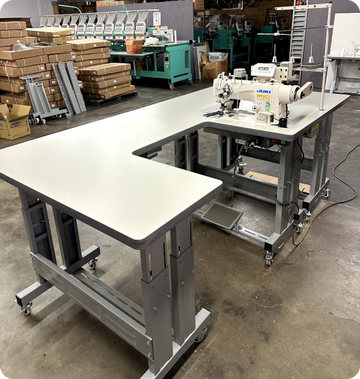
Juki es reconocida desde hace mucho tiempo por fabricar máquinas que no solo mantienen el ritmo de las exigencias de producción, sino que también las mejoran activamente. Dos modelos en particular —la Juki PLC-2710S-7 y la Juki AMS-210EN-HL— demuestran cómo la tecnología moderna de costura puede transformar la producción con materiales pesados en un proceso más rápido, fiable y eficiente.
Los materiales pesados necesitan más que fuerza: necesitan control
Coser materiales pesados no consiste únicamente en la penetración de la aguja o la potencia del motor. El verdadero desafío es mantener la calidad de la puntada, la estabilidad del material y la uniformidad durante largas series de producción. Una alimentación irregular, una tensión desigual o pequeñas desviaciones pueden provocar rápidamente defectos, retrabajos o desperdicio de materiales.
Las máquinas de coser avanzadas están diseñadas para eliminar estas variables de la ecuación. En lugar de depender en gran medida de ajustes manuales, los sistemas modernos automatizan funciones críticas para que cada puntada se coloque exactamente donde corresponde, independientemente del grosor o la complejidad del tejido.
Diseñada para trabajos exigentes: Juki PLC-2710S-7
La Juki PLC-2710S-7 está diseñada pensando en la producción de alta exigencia. Desde su estructura física hasta sus mecanismos internos, todo en esta máquina favorece una costura estable y controlada en materiales exigentes.
Diseñada para productos grandes y voluminosos
Una de las mayores ventajas de este modelo es su amplia área de trabajo. El brazo largo y la configuración de cama cilíndrica facilitan mucho el manejo de artículos sobredimensionados o tridimensionales. Los operadores pueden maniobrar conjuntos gruesos con suavidad, sin tener que luchar contra la máquina, lo que reduce la fatiga y mejora la precisión.
Alimentación uniforme a través de varias capas
Los materiales pesados suelen incluir varias capas cosidas al mismo tiempo. La PLC-2710S-7 utiliza un sistema de alimentación sincronizada que mantiene las capas superior e inferior avanzando juntas. Esto minimiza los desplazamientos, las arrugas y la formación irregular de puntadas, problemas habituales al trabajar con tejidos densos.
Potencia directa y contundente donde importa
En lugar de depender de los sistemas tradicionales de correas, esta máquina utiliza un motor de accionamiento directo que transmite la potencia directamente al mecanismo de costura. El resultado es una penetración potente de la aguja a velocidades bajas y altas, un funcionamiento más suave y menos vibraciones. Para los operadores, esto significa un mejor control. Para los fabricantes, resultados uniformes en cada turno.
Configuración más rápida y menos ajustes
Las funciones de control digital permiten a los operadores ajustar con precisión la longitud de puntada y los parámetros de costura. Una vez fijados los ajustes, la máquina los mantiene de forma fiable, lo que reduce el tiempo de configuración y limita la necesidad de correcciones manuales constantes.
Automatización de precisión: Juki AMS-210EN-HL
Mientras que la PLC-2710S-7 destaca en el manejo de artículos grandes y pesados, la Juki AMS-210EN-HL se centra en la automatización y la uniformidad, dos factores fundamentales en la producción de gran volumen.
Precisión programada en cada ciclo
Este modelo está diseñado para la costura de patrones programables. Una vez creado y guardado un patrón de puntada, puede repetirse indefinidamente con resultados idénticos. Esto es especialmente valioso para puntadas de refuerzo, asas, correas y componentes estructurados, donde la uniformidad influye directamente en la resistencia y el aspecto del producto.
Alta velocidad sin perder calidad
La velocidad no sirve de nada si la calidad se resiente. La AMS-210EN-HL equilibra una alta velocidad de costura con un control preciso, lo que permite a los fabricantes aumentar la producción sin sacrificar la integridad de las puntadas. Incluso al trabajar con materiales más pesados, las costuras se mantienen limpias y uniformes.
Gestión inteligente de la tensión
Los materiales pesados ejercen una tensión adicional sobre el hilo y las agujas. Esta máquina gestiona activamente la tensión del hilo durante todo el ciclo de costura, adaptándose a los cambios en la longitud de puntada y el grosor del material. El resultado son costuras más suaves, menos roturas de hilo y menos defectos.
Menor dependencia del operador
Como muchas funciones están automatizadas, la AMS-210EN-HL reduce la dependencia de la técnica individual de cada operador. Esto ayuda a estandarizar la calidad en las líneas de producción y simplifica la capacitación del personal nuevo.
También puede leer: Clasificación honesta de clientes: las máquinas de coser Pegasus en las que confían los profesionales
También puede leer: Soluciones de costura fiables para materiales exigentes
Beneficios reales para los fabricantes
Cuando la tecnología avanzada de costura se aplica correctamente, los beneficios van mucho más allá del área de costura:
-
Mayor eficiencia de producción gracias a ciclos más rápidos y menos interrupciones
-
Mejor calidad del producto mediante una formación uniforme de las puntadas y una alimentación controlada
-
Menor desperdicio de materiales gracias a la reducción de errores y retrabajos
-
Producción más predecible, lo que facilita la planificación y la ampliación
-
Menor esfuerzo para los operadores, lo que favorece la productividad y la seguridad a largo plazo
En conjunto, la PLC-2710S-7 y la AMS-210EN-HL cubren una amplia variedad de aplicaciones con materiales pesados, desde componentes estructurales grandes hasta costuras de patrones de precisión. Sus fortalezas se complementan, lo que las convierte en recursos valiosos para los entornos de producción modernos.
Tecnología que trabaja tan duro como los materiales
La producción con materiales pesados siempre será exigente, pero no tiene por qué ser ineficiente ni impredecible. Con máquinas avanzadas diseñadas para soportar tanto el esfuerzo físico como la complejidad de la producción, los fabricantes pueden centrarse en crecer en lugar de resolver problemas constantemente.
El enfoque de Juki no consiste en añadir funciones innecesarias, sino en aplicar una ingeniería inteligente donde más importa. Al combinar resistencia mecánica con control digital y automatización, máquinas como la PLC-2710S-7 y la AMS-210EN-HL demuestran cómo la tecnología de costura puede optimizar activamente la producción, no limitarse a respaldarla.
En una industria donde la durabilidad y la uniformidad definen el éxito, la tecnología avanzada de costura no es un lujo. Es una ventaja competitiva.

Copropietario de Prizzi Sewing Machine Co.
Experto en la optimización del flujo de trabajo de fábricas de costura