

If you have spent time around professional sewing, upholstery work, or garment production, you have probably heard people mention overlock machines. For beginners, the terminology can feel confusing at first. Most sewists simply want to know what makes these machines different and whether they are worth adding to their workspace.
The truth is simple: an overlock machine helps create cleaner, stronger, and more professional-looking seams. Once you start using one, especially for upholstery or high-volume sewing, it quickly becomes one of those machines you wonder how you ever worked without.
Professional sewists and upholstery specialists often rely on overlock machines to improve seam quality, speed up production, and create cleaner finishes. Shops working with heavy fabrics and upholstery materials often use equipment like the machines found in Prizzi Sewing Machine Co.’s upholstery sewing collection.
What Is an Overlock Sewing Machine?
So, what is an overlock sewing machine exactly?
An overlock machine, sometimes called a serger, is a specialized sewing machine designed to sew over the edge of fabric while trimming and finishing it at the same time. If you have ever looked inside a T-shirt, hoodie, cushion cover, or upholstered furniture piece and noticed neat thread wrapping around the edge of the fabric, that was likely done with an overlock machine.
You may also hear the terms serger or overlock serger machine. While the wording changes, they all describe the same equipment used for finishing seams and protecting fabric edges.
Unlike standard sewing machines that use a bobbin system, overlock machines use multiple threads and loopers to create flexible, durable seams that prevent fraying.
What Does an Overlock Machine Do?
One of the biggest reasons people invest in these machines is efficiency.
The biggest advantage is simple: the machine creates clean, professional seams in one quick step.
An overlock machine can:
Trim fabric edges
Prevent fraying
Sew seams
Finish raw edges
Work smoothly with stretch fabrics
Create durable stitches
Save production time
Instead of sewing a seam first and finishing the edge later, the overlock machine handles everything at once.
This is especially important in upholstery shops and industrial sewing environments where clean seams and fast workflow matter every day.
What Is an Overlock Machine Used For?
Before buying one, many customers want to understand where these machines are most useful.
The answer depends on the type of sewing you do.
Overlock machines are commonly used for:
Upholstery projects
Garment construction
Knit fabrics
Stretch materials
Cushion covers
Decorative edge finishing
Sportswear
Home décor sewing
Marine and automotive interiors
For upholstery professionals, overlock machines help create cleaner seams on cushions, furniture covers, and heavy fabric applications.
Industrial sewing equipment designed for demanding upholstery environments can make a major difference in seam durability and workflow consistency.
How Does an Overlock Machine Work?
Understanding the basic mechanism helps explain why these machines are so fast and efficient.
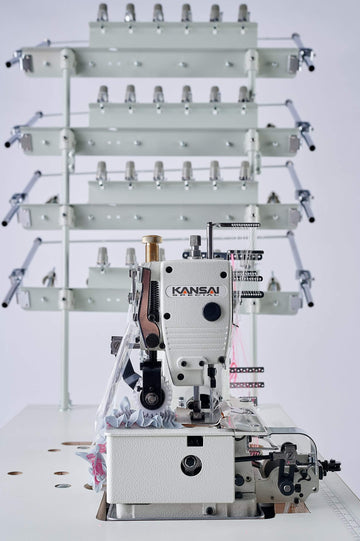
Unlike a regular sewing machine, an overlock machine uses several thread cones working together with loopers and cutting blades.
As fabric passes through the machine:
The blade trims the raw edge
Needles create the stitch
Loopers wrap thread around the edge
The seam is secured instantly
No matter the brand or model, the overall stitching process stays very similar.
The result is a clean, flexible seam that looks professional and holds up well over time.
What Is the Difference Between a Serger Machine and Overlock Machine?
Another common point of confusion is the difference between a serger and an overlock machine.
In most cases, there is no real difference.
In the United States, people often use the word “serger.” In industrial sewing and many other countries, the term “overlock machine” is more common.
Both machines are designed to:
Finish fabric edges
Prevent unraveling
Create strong seams
Improve production speed
In most sewing conversations, the two names are used interchangeably.
Why Upholstery Professionals Use Overlock Machines
In upholstery work, strong seams are essential. Thick materials, layered fabrics, vinyl, and furniture textiles require dependable stitching that looks clean and lasts.
That is why many professional upholstery shops rely on industrial overlock systems built for long hours, heavy materials, and reliable performance.
Industrial overlock machines offer several advantages:
Faster sewing speeds
Better seam consistency
Cleaner edge finishing
Reliable heavy-duty performance
Reduced production time
Long-lasting durability
For businesses handling large sewing volumes, the right overlock machine can make daily production smoother and more efficient.
Read Also: Which Overlock Machine Is the Best? A Simple Guide for Choosing the Right One
Read Also: Understanding Overlock Stitches for Professional Sewing
What Is the Best Overlock Sewing Machine?
Choosing the right overlock machine depends mainly on the type of projects you plan to handle.
For hobby sewing and clothing repairs, domestic overlock machines are usually enough.
For upholstery shops, furniture manufacturing, or production sewing, industrial models are often the better investment because they are built for continuous use and heavier materials.
Both domestic and industrial overlock machines are available today depending on the type of sewing environment and production demands.
When choosing an overlock machine, it helps to consider:
Fabric type
Thread options
Sewing speed
Ease of threading
Production volume
Differential feed features
If you are unsure which setup fits your workflow best, comparing machine speed, fabric handling, and thread options is a good place to start.
So, what an overlock machine does is much more than simply finishing edges. It improves seam quality, increases efficiency, strengthens garments and upholstery projects, and delivers the polished appearance customers expect from professional sewing.