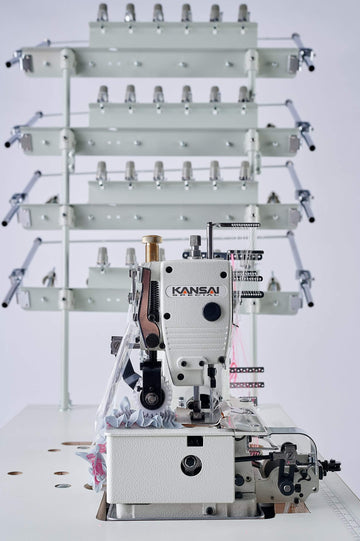
Sewing Machine With Double Needle
A double needle is often called a twin needle, coming off one shaft, so you can put it in your machine just like a regular needle. Two parallel stitches on the top of the fabric remind one of a coverstitch. A double needle sewing machine is widely used for hemming and topstitching. It is suitable for sewing stretchy fabrics. This type of machine also adds a decorative touch to garments, which determines its use in heirloom sewing projects. It can save a lot of time in home sewing and industrial textile production. Choose the right model to finish tasks swiftly and effectively.
40+ Years of Trust
Empowering top manufacturers since 1981
KANSAI Distributor
Best specialized machines & support
Lifetime Warranty
On all PRIZZI custom sewing tables
100% New Machines
Come with the standard manufacturer's warranties
CHRISTMAS SALE
Up to 50% OFF Sitewide + Promocode
days
days
hours
hrs
minutes
mins
seconds
secs
Industrial Overlock Sewing Machine Juki МО-6714DA-BE6-50H
Industrial Overlock Sewing Machine Juki MO-6814AS-BE640HDD10S
Industrial Lockstitch Machine JUKI LH-3528-FA00S
Industrial Overlock Sewing Machine JUKI MO-6816AS-FF6-50H-DD10S
Industrial Overlock Sewing Machine MO-6716 DA 30P
Industrial Overlock Sewing Machine EXT5214-M03/333-2X4/KS375/PT
Industrial CoverStitch Machine PX-302-4W
Industrial Overlock Sewing Machine MX3216-03/333
Industrial Overlock Sewing Machine MX5214-M03/333
Industrial Lockstitch Machine LS-2342S-70B
Industrial Lockstitch Machine JUKI LU-1560N-7
Industrial Chainstitch Machine JUKI MH-382U
Industrial Lockstitch Machine JUKI LH-4588CFGF-7NB
Industrial Lockstitch Machine JUKI LH-3578AGF-7WBAK135
Industrial Lockstitch Machine JUKI LH-3568A-F7WBAK135
Industrial Lockstitch Machine JUKI LS-2342
Industrial Lockstitch Machine JUKI LU-1560N
Belt-Loop Attaching Machine MOL-254DAB
Automatic Welting Machine APW-895NS-12ZR-1D
Industrial Lockstitch Machine LH4578CFG7NB/SC956B
What is a Double Needle Sewing Machine?
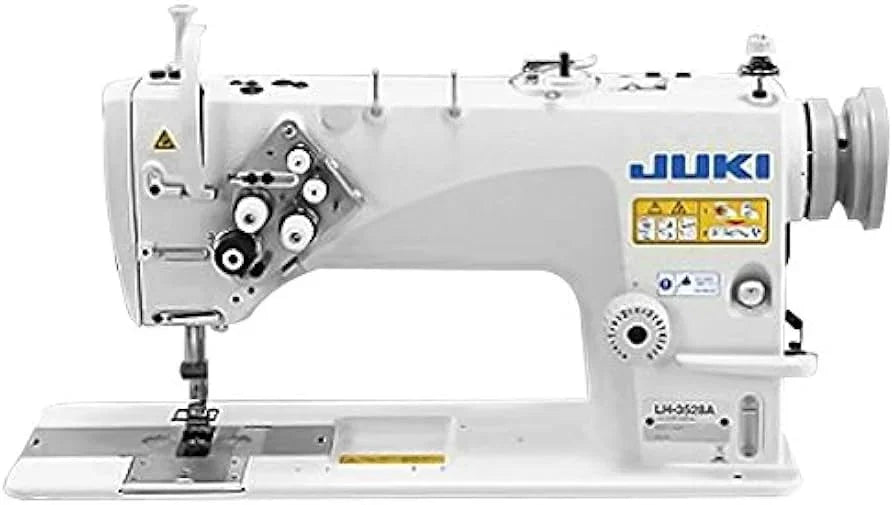
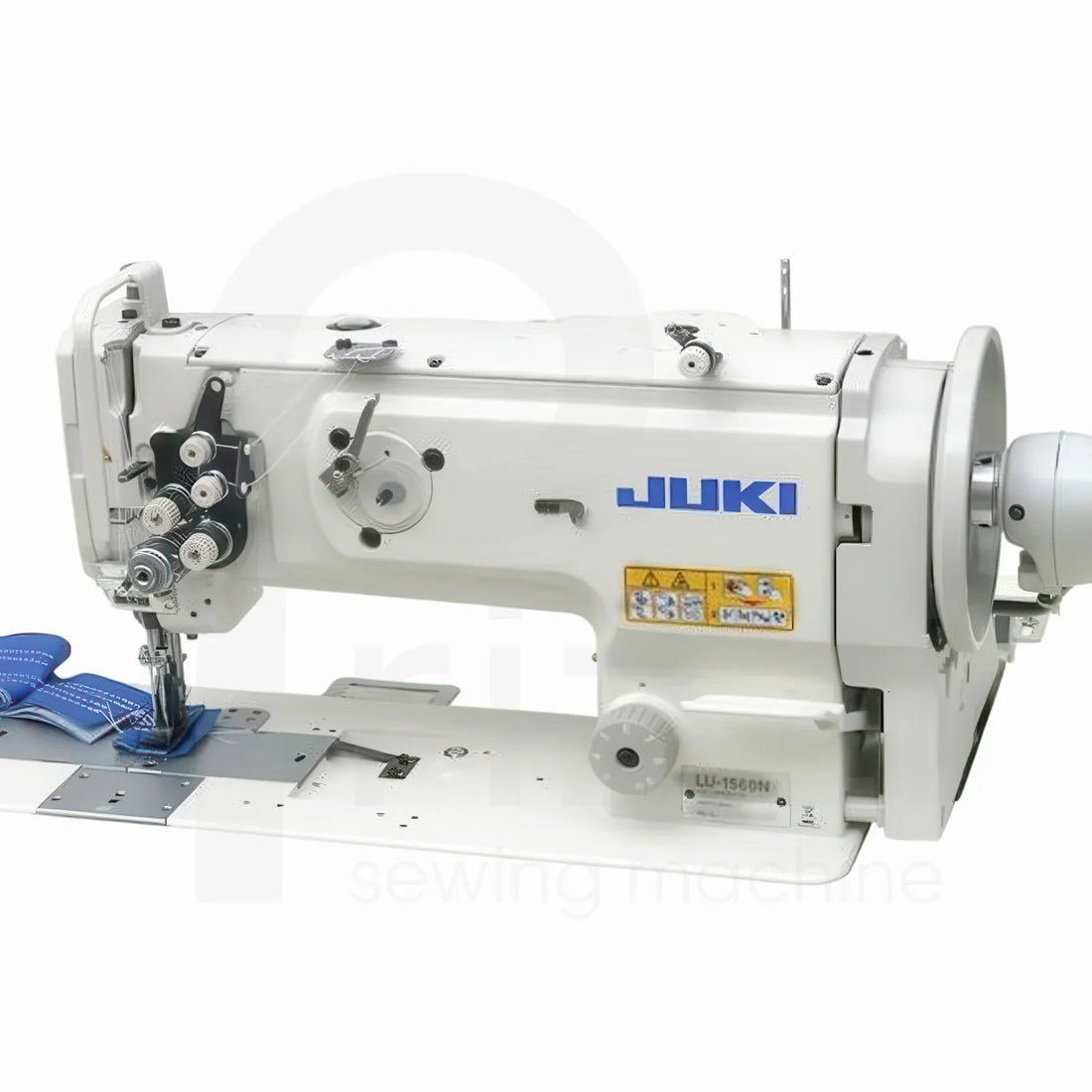
A double needle sewing machine has two needles, located on a single bar with a single heel. It makes stitches in perfectly straight parallel lines, creating a polished appearance. The distance between the two lines can be adjusted in the settings. When the machine works, each needle draws from its own thread spool. The bobbin thread then interlocks both top threads in a shared loop, which promises strong stitches. On the wrong side, the machine forms zigzag stitches that maintain the fabric’s elasticity. Some double needle sewing machines are designed to sew in a straight line, while others can do slight zigzag movements. When sewing, you should be careful not to damage the plate of your machine.
Read moreWhat is a Double Needle Sewing Machine?
A double needle sewing machine has two needles, located on a single bar with a single heel. It makes stitches in perfectly straight parallel lines, creating a polished appearance. The distance between the two lines can be adjusted in the settings. When the machine works, each needle draws from its own thread spool. The bobbin thread then interlocks both top threads in a shared loop, which promises strong stitches. On the wrong side, the machine forms zigzag stitches that maintain the fabric’s elasticity. Some double needle sewing machines are designed to sew in a straight line, while others can do slight zigzag movements. When sewing, you should be careful not to damage the plate of your machine.
The difference between a single needle and a double needle is functional. A single needle machine creates one row of stitches, which makes its application limited. A double needle creates two perfectly parallel lines of stitches in a single pass. It can be useful for topstitching, decorative stitching, and hemming knit fabrics. A single needle forms a standard straight or zigzag stitch. A double needle builds two parallel stitches on one side and zigzag stitches on the one. As a result, these two types of machines deliver different visual outcomes.
Types of Double Needle Sewing Machines
Double needle sewing machines are meant for different purposes. Domestic or home-use machines can be used for basic sewing tasks in the household. Operators can create clean hems and decorative stitches, mainly on stretch fabrics. These machines are versatile but can’t be used for heavy-duty work.
Industrial machines are made for continuous operation in factories and professional workshops. They can complete more sewing tasks in less time, which also reduces labor costs. Here are the main configurations of industrial machines with a double needle:
-
Flat-bed machines can sew several layers of flat fabrics in shirts, pants, and upholstery.
-
Post-bed machines can create bulky items like shoes, bags, and automotive accessories.
-
Cylinder-bed machines can sew tubular or curved pieces like cuffs, sleeves, and collars.
Commercial machines fill the gap between home and industrial models. They are more functional than domestic machines and are suitable for small businesses. They also offer higher durability and faster stitching than full-scale industrial machines.
Benefits of Using a Double Needle Sewing Machine
Double needle industrial sewing machines come with multiple benefits, such as:
-
Durability and quality build: Robust construction is powered by quality components that enable smooth performance for hours.
-
Time efficiency: Multiple stitches are created at high speed, enabling high-volume output.
-
Compatibility with fabrics: Lightweight and heavyweight fabrics can be handled with a double needle.
-
Reasonable cost: The machine provides significant cost savings over time, mainly due to its efficiency, versatility, and durability.
-
Professional-looking finishes. A double needle creates symmetrical and elegant finishes that look great on any surface.
For today's sewing operations, double needle technology builds new levels of productivity, quality, and creative solutions. The parallel rows of reinforced stitching offer both functional and visual appeal. As demand grows for durable goods, double needle capabilities can be a critical asset for progressive businesses.
Applications of Double Needle Machines
Double sewing machine needles are used to deliver practical strength and visual aesthetics. Parallel stitches are perfect for sewing jeans, shirts, uniforms, and other garment production. These machines create perfectly aligned stitches in furniture upholstery and leatherwork. They are also used for hemming and topstitching. Double machine needle sewing can handle different fabrics across commercial settings, especially when it comes to small businesses. The space between needles can be adjusted based on project needs.
Double Needle Sewing Machine Parts and Accessories
A double needle sewing machine has two identical needles, located on a single bar with a single heel. The needle needs to be installed in place of a universal needle, enabling two perfectly straight parallel lines to be made in a single pass. Double needles can be of a different width, from 1.6 mm to 6 mm. They may also be universal or designed for specific types of fabrics, like denim and stretch. Double needles work with two upper thread spools and one bobbin thread to create parallel stitches.
Other significant double needle sewing machine parts include hemming guides, walking feet, and quilting attachments, which help maintain accuracy and keep control over the fabric. Machines also come with bobbins, presser feet, and spool holders to ensure versatility for decorative, stretch, and finishing applications.
Prices and Buying Considerations
The double needle sewing machine price depends on the selected brand, model, and functionality. Domestic models usually cost from $600 to $1,200. Industrial machines with more complex functionality cost from $1,500 to $5,000 or more. Build quality, types of stitches, and usage needs are also significant factors that affect the final cost. Buyers should also consider whether they need a machine for light- or heavy-duty operation.
When buying a new machine, you get the recent features and the manufacturer’s warranty. Used machines are more affordable and can be well-maintained when purchased from reliable sellers. But the risk of buying a used machine is always there.
How to Choose the Best Double Needle Sewing Machine
Consider a few factors when searching for a 2 needle sewing machine. These include:
-
Keep your domestic or industrial needs clear.
-
Check how much money you have for the purchase in the local budget.
-
Compare the available models from top brands, focusing on the key features and overall functionality.
-
Ensure the manufacturer has offices in your region.
-
Take a look at the machine’s blueprint to learn the setup and usage details.
Don’t forget to check the warranty terms. Make sure you get enough protection after making a purchase.
Maintenance and Care
Sewing machines with double needles are intended for light- and heavy-duty manufacturing. To ensure proper functionality, users must ensure proper maintenance, such as:
-
Regular cleaning of lint, dust, and thread buildup.
-
Oiling all moving parts according to the manufacturer’s recommendations.
-
Scheduling regular inspections by specialists to detect dull or damaged needles.
-
Adjusting thread tension and tightening screws.
-
Ensuring smooth functionality of the foot pedal and knee controls.
-
Maintaining proper functionality of bobbins and bobbin cases, tension springs, and servo and clutch motors.
-
Using quality needles of the right type and width based on the project needs.
Consistent maintenance promises flawless performance in the long run. Contact professional services in case of any emergency.
Conclusion
The market offers many double needle sewing machines for sale. If you need one for domestic tasks or large industrial projects, you won’t have problems finding it in Los Angeles, South El Monte, California. Contact official manufacturers and local retailers for professional guidance. They can help you pick a machine that would create perfect parallel stitches for your particular needs. Consider your workload and budget before making the final choice!
Read less- Featured
- Best selling
- Alphabetically, A-Z
- Alphabetically, Z-A
- Price, low to high
- Price, high to low
- Date, old to new
- Date, new to old