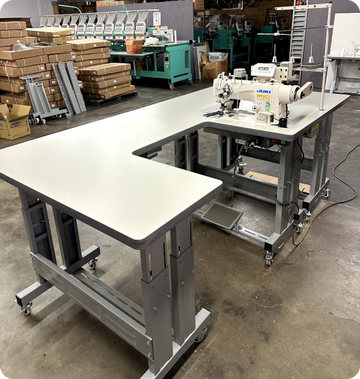
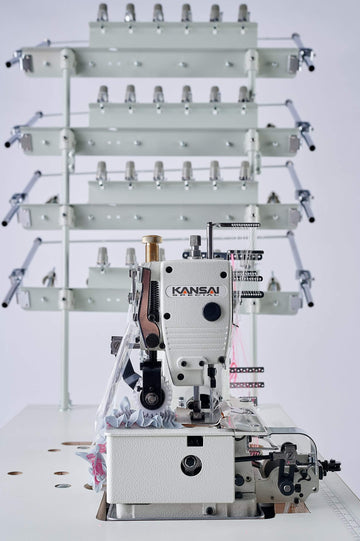
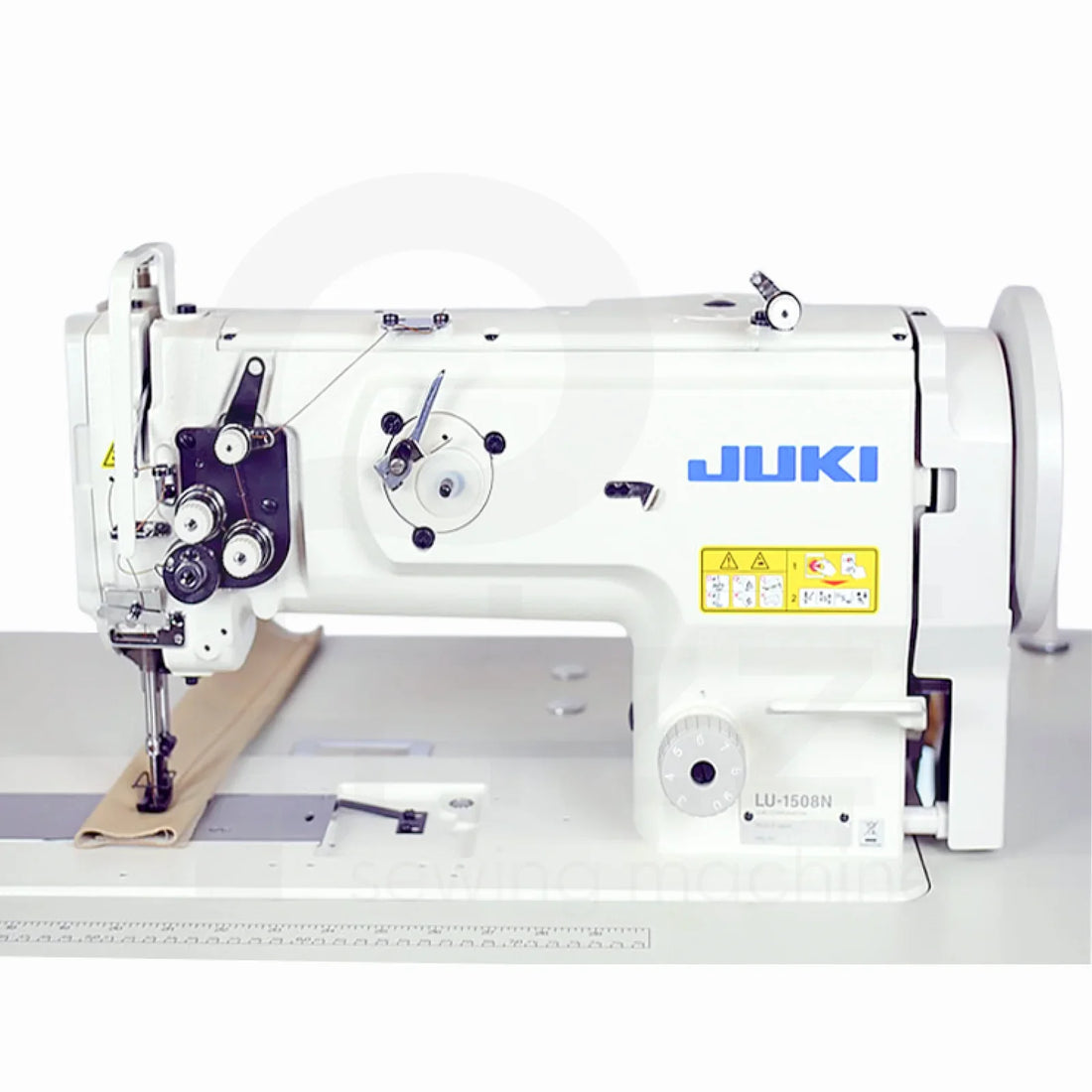
Prizzi has been supplying industrial equipment out of South El Monte, California since 1981, and this collection gathers the models our customers actually keep running on production floors: JUKI, Kansai Special, JIN and Consew heads, matched to tables and motors we build ourselves. Below is what we tell people on the phone when they call and ask which sewing machine for bags fits their shop, their materials and their budget.
Start with the feed, not the brand
Almost every problem in bag production traces back to the feed system. A standard drop feed pushes the bottom layer while the presser foot holds the top one still, so coated nylon, vinyl and leather drift apart and your seam finishes half an inch short on the top ply. A proper sewing machine for bag making solves this with either a walking foot (unison feed, where the needle, inside foot and feed dog all move together) or a compound feed with a needle feed added to the picture. Both grip all layers at once and carry them through the seam as a single sandwich.
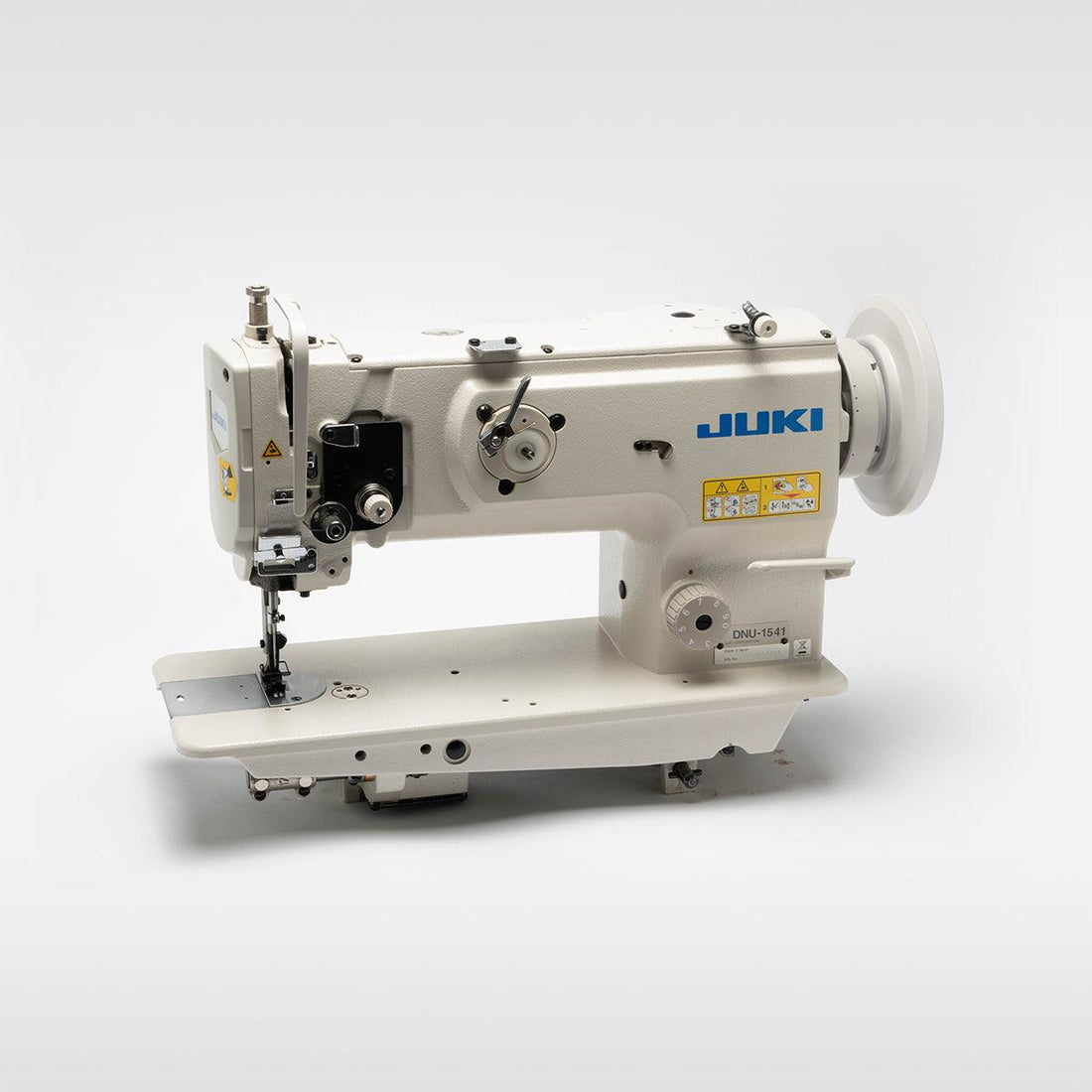
Walking foot machines like the JUKI DNU-1541 are the workhorse of the category, and for good reason. Alternating presser feet climb over seam intersections instead of stalling in front of them, which matters enormously when you are attaching a gusset to a base panel that already carries binding and a zipper tape. Most sewing machines for bag making in this class handle up to about 9 mm of material under the foot with lift to spare, take needles up to size 24 or heavier, and run comfortably at 2,000–2,500 spm without cooking the thread.
Flatbed, cylinder arm or post bed
Bed geometry decides what you can physically reach. A flatbed is the most versatile surface for panel work, binding, quilting the outer shell and running long straight seams before assembly. If you make flat totes, pouches, laptop sleeves and simple messenger bags, the best sewing machine for making bags in your shop will probably be a flatbed walking foot with a large table and good lighting, because ninety percent of your seams happen while the piece is still open and unformed.
Cylinder arm machines are the answer once the bag closes up. A narrow round bed lets you slide a finished body onto the arm and stitch a bottom, a boxed corner or a tubular strap that a flat table would fight you on. Anyone building backpacks, duffels, saddlebags or luggage will eventually need one, and many shops decide the best sewing machine for bag making is simply whichever cylinder arm they can afford, because it does everything a flatbed does plus the closed work.
Post bed machines raise the sewing point on a vertical column, which gives you visibility and manoeuvrability on three-dimensional shapes. They are the standard choice in handbag factories for attaching trims, piping and decorative panels around a curve. A post bed sewing machine for making bags is not usually the first machine a workshop buys, but it becomes indispensable the moment your product line moves from flat squares to structured, shaped goods with visible topstitching on the outside.
Working with leather
Leather changes the calculation again. Hide does not forgive a wrong stitch, because every hole is permanent and unpicking leaves a dotted line across the panel forever. A sewing machine for leather bags therefore needs stable, repeatable stitch length, adjustable presser foot pressure so the top grain does not bruise, and enough foot lift to clear a folded edge without dragging. Triple feed is effectively mandatory. Roller feet or Teflon feet help on glazed and pull-up finishes where a steel foot would leave marks.
Thread and needle capacity matter as much as feed. Bonded nylon or polyester in sizes 69, 92 and 138 is normal for bags, and heavier still on belts and straps. The rotating hook has to be sized to that thread, which is exactly why sewing machines for leather bags come with larger hooks and stronger take-up levers than apparel heads. Match needle point to material too: a round point for fabric, a cutting or diamond point for hide. Wrong point geometry tears leather instead of piercing it cleanly.
Canvas, cordura and technical fabrics
Not every workshop works in hide. Waxed canvas, 1000D cordura, sailcloth and heavy denim have their own habits. They are abrasive, they eat needles, and they build thickness fast when you fold a hem twice and add webbing. The right machine for sewing bags in these materials is usually a heavy-duty walking foot with a servo motor tuned to run slowly at full torque, so you can creep over a bar-tacked handle joint one stitch at a time instead of hitting it at speed and breaking a needle into the hook race.
Speed control is worth spending money on. A servo motor with a needle positioner and a speed reducer pulley gives you complete control at 100 spm and full production speed when the seam opens up again. Anybody comparing the best industrial sewing machine for bag making options should look at the motor and table package as seriously as the head itself, because an excellent head on a clutch motor is far harder to control than a mid-range head on a properly configured direct-drive servo.
Automation for repeat operations
Once your volumes rise, single operations start to dominate labour cost. Handle attachment, strap tacking, D-ring holders and logo patches are all short, repetitive, high-stress seams. A programmable pattern machine such as the JUKI AMS series sews a stored shape in one cycle with identical results every time, and a bartacker locks the stress points that would otherwise be the first thing to fail in the field. This is where an industrial sewing machine for bag making stops being a tool and starts being a production line component.
The economics are simple. If an operator spends forty seconds positioning and stitching a handle by hand and a pattern machine does it in eight with no rework, the payback horizon on the machine is measured in months rather than years. Shops running a few hundred units a week should at minimum add a bartacker. Beyond a thousand units, a machine for sewing leather bags with programmable pattern capability usually earns its keep on straps alone, before you count the reduction in warranty returns from failed attachment points.
Needle, thread and stitch quality
Stitch appearance is a large part of perceived quality on a finished bag, and buyers notice it before they notice anything else. Even stitch spacing, clean corners and consistent tension over changing thicknesses are what separate a professional product from a home-made one. The best sewing machine for leather bags in any price band is the one that holds tension when the material under the foot goes from two plies to six mid-seam, which is a function of hook design, thread path and presser foot pressure working together.
Long stitch length capability is another practical requirement. Bags look correct with 3.5 to 5 mm stitches, which is far longer than apparel machines are designed to produce. Check the maximum before buying. Also check reverse quality, since a bag with a sloppy backtack at every seam end reads as cheap no matter how good the leather is. These small mechanical details explain most of the sewing machine for bags price differences between a bargain import and a JUKI or Kansai head.
What it costs
Budget honestly, and budget for the full setup. A head sold on its own still needs a table, a stand, a motor, a lamp and often a speed reducer before it can sew anything. A complete walking foot flatbed package generally lands in the low thousands, cylinder arm machines sit above that, and programmable pattern systems run considerably higher. When you see a bag sewing machine for sale advertised at a suspiciously low figure, check whether the price covers a head only, and check whether parts and service are available in the United States when something wears out.
Also weigh the cost of downtime. A machine that stops for two days waiting on a hook from overseas costs more in missed shipments than the difference in purchase price. Buying the best sewing machine for bags you can justify from a dealer who stocks spares locally is usually cheaper across five years than buying twice. Our tables carry a lifetime warranty, and we keep consumables and common wear parts on the shelf for the brands we sell.
Choosing by production stage
Small studios and one-person leather workshops normally start with a single flatbed or cylinder arm walking foot and add from there. If you sell finished goods and your reputation rides on stitch quality, the best sewing machine for making leather bags at this stage is a compound feed cylinder arm with a servo motor and a reducer, because it covers closed work, open panels, straps and repairs on one head. Add a skiver and a clicker press before you add a second sewing machine.
Growing brands producing in canvas and synthetics tend to buy in pairs, dedicating one head per operation so nobody rethreads between tasks. A dedicated sewing machine for canvas bags set up with heavy thread and a size 22 needle stays configured for structural seams, while a second lighter machine handles linings, pockets and labels. Splitting the work this way removes setup time and stops thread tension drifting every time somebody changes materials halfway through a run.
Established manufacturers build around cells. An industrial sewing machine for leather bags handles the shell, a post bed covers trim, a bartacker locks stress points, a pattern machine sews handles, and an edge trimmer or binder finishes seams. At that scale the question is no longer which single machine to buy but how to sequence the line so no station waits on another. We help customers plan that layout, including table heights and custom cut-outs sized to the specific heads.
Totes, market bags and simple constructions
Not every product needs the heaviest equipment on the page. Flat, unstructured goods in cotton canvas, jute or light waxed cloth sew well on a straightforward heavy-duty flatbed. The best sewing machine for making tote bags is one with a clean straight stitch, a decent throat space and reliable feeding over folded handle joins, and that is a far lower bar than a structured leather satchel with piped edges. Buy for the product you actually sell, not for the hardest product you might sew one day.
That said, capability is cheap insurance if your line is still evolving. Many workshops start with cotton totes and end up in vegetable-tanned leather within two years. An industrial sewing machine for bags with a walking foot and heavy thread capacity will handle both, whereas a light domestic head will limit you from the first upgrade in materials onwards. Buying one step ahead of your current range is the single most common piece of advice our sales team gives.
Why domestic machines fall short
People often ask whether their existing home machine can cope. It can, briefly, and then it cannot. A domestic sewing machine used for making bags will manage two layers of cotton canvas and a light lining, but the aluminium frame flexes under load, the motor lacks torque at low speed, the hook cannot carry bonded thread, and the feed slips on anything coated. Timing drifts, skipped stitches appear, and the repair bill arrives well before the machine has paid for itself in finished product.
Industrial heads are cast iron, oil-lubricated and designed to run eight hours a day for a decade or more. That is the fundamental difference. Sewing machines for making bags in a commercial setting are rebuilt rather than replaced, because the parts are available, the tolerances are serviceable and the frames do not wear out. The purchase feels expensive once and then stops being a recurring cost, which is exactly the opposite of the domestic upgrade cycle most makers get trapped in.
Read less