Juki Sewing Machine Automatic
Modern production requires equipment that could handle diverse materials while maintaining quality standards. Automatic industrial sewing machines marked a fundamental shift from traditional manual operations. High speed and durability make them useful in industrial and commercial settings. Automated sewing offers high efficiency with no human intervention.
40+ Years of Trust
Empowering top manufacturers since 1981
KANSAI Distributor
Best specialized machines & support
Lifetime Warranty
On all PRIZZI custom sewing tables
100% New Machines
Come with the standard manufacturer's warranties
250th Anniversary Sale Event
Up to 50% OFF Sitewide
days
days
hours
hrs
minutes
mins
seconds
secs
Industrial Lockstitch Machine LZ-2290CF-7WBAK156
Brand:
JUKI
Industrial Lockstitch Machine LU-2828NVA-7NBBSZ
Brand:
JUKI
Industrial Lockstitch Machine JUKI DLM-5400NH-7WB Edge Trimmer (6.4 mm Needle-to-Knife)
Brand:
JUKI
Industrial Lockstitch Machine JUKI DLM-5400ND-7WB Edge Trimmer (3.2 mm Needle-to-Knife)
Brand:
JUKI
Industrial Lockstitch Machine JUKI DLN-5410N-7WB Needle Feed, Automatic Functions
Brand:
JUKI
Industrial Lockstitch Machine JUKI DLN-5410NH-7WB Needle Feed, Auto Functions, Heavy Fabrics
Brand:
JUKI
Industrial Lockstitch Machine JUKI PLC-2765S#AB/BT/DL
Brand:
JUKI
Industrial Lockstitch Machine JUKI DLN-9010ASSWB/AK118 Needle Feed, Light- to Medium-Weight Fabrics
Brand:
JUKI
Industrial Lockstitch Machine LU-2810NVA-70BBSZ
Brand:
JUKI
Industrial Lockstitch Machine LK-1903CST311/BR35SDK
Brand:
JUKI
Industrial Lockstitch Machine JUKI LK-1920HA5000Z/MC6764DD
Brand:
JUKI
Industrial Lockstitch Machine JUKI LU-2828A-70BBS
Brand:
JUKI
Industrial Lockstitch Machine JUKI PLC-2710NS
Brand:
JUKI
Industrial Lockstitch Machine LS-2342S-70B
Brand:
JUKI
Industrial Lockstitch Machine JUKI LU-2810A-70BBS
Brand:
JUKI
Industrial Lockstitch Machine JUKI LH-4588CFGF-7NB Double-Needle, Corner Stitching Capability
Brand:
JUKI
Pattern Sewing Machine JUKI AMS-210EN-HL2210SZ5000D-IP 220 × 100 mm Pneumatic Feeding Frame
Brand:
JUKI
Pattern Sewing Machine JUKI AMS-210EN-HL1306/SZ7300D Medium- to Heavy-Weight Pneumatic Feeding Frame (130 × 60 mm)
Brand:
JUKI
Pattern Sewing Machine JUKI AMS-210EN-ZL1510RZC/X90023 Extra Heavy-Weight Materials 150 × 100 mm
Brand:
JUKI
Pattern Sewing Machine JUKI AMS-210EN-ZL-1510RZW/X90051 Extra Heavy-Weight 150 × 100 mm
Brand:
JUKI
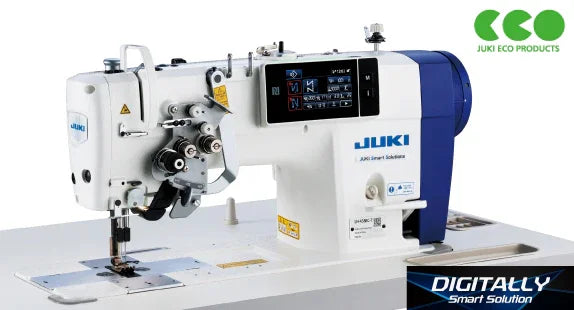
If you consider the automatization of production lines, consider the equipment from top brands like Juki. Automatic sewing machines Juki have become a significant part of industrial production in South El Monte, Los Angeles, California. Once you load a template, the machine does the rest of the job.
Read moreIf you consider the automatization of production lines, consider the equipment from top brands like Juki. Automatic sewing machines Juki have become a significant part of industrial production in South El Monte, Los Angeles, California. Once you load a template, the machine does the rest of the job.
What Is an Automatic Sewing Machine?
An automatic sewing machine is an advanced manufacturing equipment, designed to automate the sewing process. Unlike traditional sewing machines that require manual or semi-automatic operation, these machines use advanced technology to perform complex stitching patterns with no human intervention. Core features of a fully automatic system include:
-
Automatic threading and cutting: The build-in needle threader reduces the setup process. The automatic cutter trims thread ends after each seam.
-
Pre-programmed stitch patterns: A type of stitch pattern can be selected on the menu. No need for manual adjustments.
-
Digital controls: Stitch length/width, tension, and speed can be adjusted in the machine settings before sewing.
-
Safety and durability aspects: Strong frames and advanced sensors prevent overheating, needle breakage, or material jams. Strong design ensures continuous operations under heavy workloads.
Automated systems are widely used across multiple manufacturing sectors where speed and consistency are required. Juki automatic sewing machines are essential equipment in industrial filtration and conveyor belt manufacturing, as well as outdoor gear production.
Key Benefits of Automatic Sewing Machines
Automatic industrial sewing can improve many aspects of the production process. The main benefits include:
-
High-speed production. Modern technologies enable high-volume operation at high speed.
-
Consistent stitch quality. Servo motor control provides precise speed and high accuracy while machines create a digital stitch pattern.
-
Reduction in labor costs and high accuracy. No need for skilled workers to operate an automatic sewing machine. Programmable settings help create complex patterns with high accuracy and with no human intervention.
-
Long-term savings and strong warranty options. Automatic sewing machines deliver significant long-term savings by reducing labor expenses and material waste. Many manufacturers also provide extended warranty terms, ensuring proper protection for businesses.
Juki fully automatic sewing machine also offers versatility by completing multiple tasks on various fabrics. Operators just need to monitor the smooth performance to ensure an excellent result.
Types of Automatic Sewing Machines
Automatic sewing machines may have different functionality, depending on their initial purpose. Automatic programming machines are simple devices with built-in computer control to perform automated sewing tasks. They are suitable for beginners and those working at home. Heavy-duty industrial models can sew commercial fabrics like denim, canvas, and leather. Reinforced frames and servo motors can handle multiple layers of thick fabric at high speed. This type of machine is widely used in the footwear, furniture, and automotive industries.
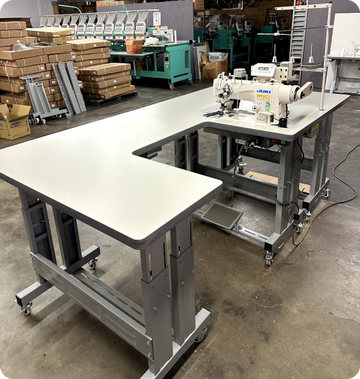
Automatic sewing machines have fully automatic table setups for factories and workshops, enabling continuous operations. Automatic fabric feeding, trimming, and stacking systems are suitable for high-volume garment production. Modern configurations reduce the need for manual operations while increasing industrial efficiency. Specialized machines perform specific sewing tasks based on pre-programmed stitches. Buttonhole, embroidery, and quilting machines can help optimize mass production lines.
Choosing the Right Automatic Sewing Machine
When choosing the best automatic juki sewing machine, consider several critical factors such as:
-
Fabrics: Decide whether you use lightweight or heavyweight fabrics, due to different stitching requirements.
-
Scale of production. Consider the size of your industrial needs, whether you have a small workshop or a mass production line.
-
Space requirements. Check how much space you have for sewing equipment. You may have a table for placing a sewing machine. Or you may need the whole machine construction for the installation setup.
-
Warranty and service support. Make sure the manufacturer provides reasonable warranty terms, providing customer protection after the purchase. In case of an emergency, you should be able to contact the support service for professional assistance.
Buy a sewing machine that meets your industrial needs. It is in your very best interest to buy a machine that offers high quality at a reasonable price. Once you make the right choice, you will save production costs and increase your efficiency.
Automatic Sewing Machine Price Guide
The price of the automatic sewing machine depends on the brand, model, and functionality. Entry-level machines for home or small workshops may cost from $300 to $10,000. Industrial sewing machines integrate more complex technologies to handle mass production lines. Their cost may reach $90,000 and above. Professionals use these machines to deliver high-volume output in a short period of time. Juki automatic sewing machine price may range from $7,000 to $18,000. For example, Juki Industrial CoverStitch Machine MF7223DU10 costs around $17,500, offering extensive features for industrial needs.
Automation has a direct impact on the cost. Pre-programmable stitching patterns, servo motors, and touch-screen controls increase the price tag. These factors also reduce labor costs and ensure consistent stitch quality. Paying more for sewing equipment may save money in the long run.
Where to Use Automatic Sewing Machines
California and Los Angeles, specifically, have become significant hubs for industrial manufacturing. Large-scale factories have to purchase automatic sewing machines to optimize their industrial production lines and increase efficiency. Garment production and upholstery can benefit from advanced technology, especially financially. Running at high speed with minimal human intervention, automatic machines help commercial businesses in South El Monte save time and money. Small-scale operations are also moving toward automated solutions in order to stay competitive in a dynamic market.
Comparing Automatic Sewing Machines to Competitors
When it comes to automatic sewing machines, Juki stands out for its advanced technology, high build quality, and strong warranty terms. The brand incorporates servo motors, pre-programmable stitching patterns, and special features like thread trimming and fabric feeding. Pegasus and Jack are the closest competitors that offer similar features but with less consistency.
Juki industrial automatic sewing machine is designed for continuous use. Strong frames and quality components can handle heavy loads at high speed. Many competitor brands may offer lower cost by saving money on durability and precision. Juki also offers longer warranty periods, more inclusive coverage, and broader access to support.
Fully-automated machines deliver unique advantages: fewer manual adjustments, higher stitch consistency, and low risk of human error. In large industrial settings, this kind of equipment can lead to lower labor costs and less wasted material. Businesses in garment, upholstery, and technical textiles often choose automation for these reasons.
Conclusion
Investing in an automatic sewing machine brings significant benefits such as efficiency, quality, warranty, and cost savings. Juki and similar industrial brands have proven how automation can improve sewing operations. Now it is time to evaluate your needs and find out if upgrading is the right decision. Explore available models, compare market prices, and request a personalized quote to find the best fit. Increase efficiency, cut costs, and keep your production competitive in today’s demanding market.
Read less- Featured
- Most relevant
- Best selling
- Alphabetically, A-Z
- Alphabetically, Z-A
- Price, low to high
- Price, high to low
- Date, old to new
- Date, new to old